Buying a Tiny House in Europe: 2026 Guide to Costs, Sizes & What to Consider
Here is what you need to know about the practical aspects of choosing a tiny house for living, holidays or rental use.
What is a tiny house?
A tiny house is a compact, highly efficient dwelling designed to make the most of every square metre.In practice, the term usually refers to a small, fully functional dwelling designed around efficient use of space, often with a strong focus on mobility, energy efficiency and a simpler way of living.
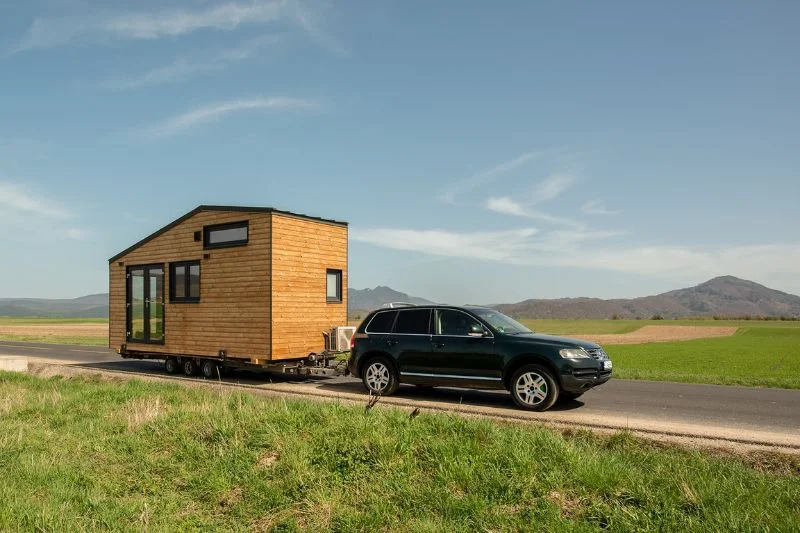
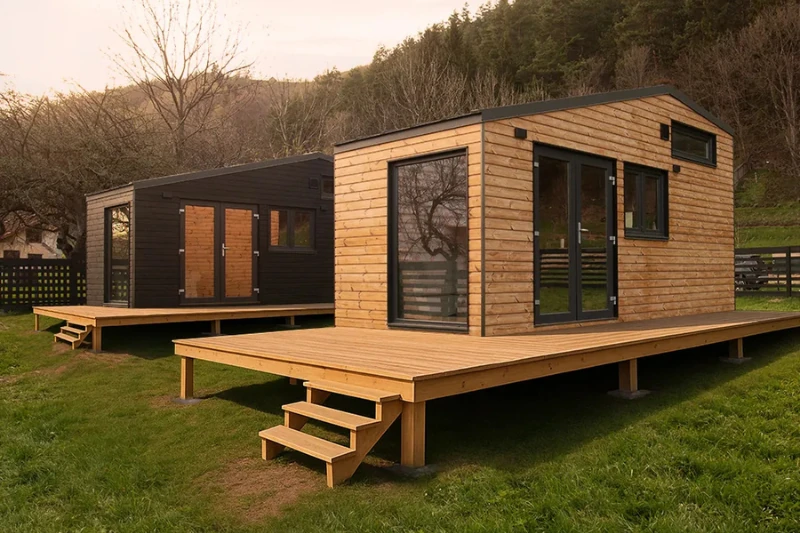
Depending on the model, a tiny house can be built on a trailer or designed to be placed on removable supports such as concrete blocks or screw piles.
The result is a compact home that can combine living, sleeping, cooking, bathroom and storage areas within a surprisingly small footprint.

Why are tiny houses becoming so popular?
Space is becoming increasingly valuable, while many people are looking for more efficient and flexible ways of living.
Tiny houses respond to several of these trends at once:
- Autonomy
- Efficiency
- Simplicity
Advantages of Tiny Houses
- Affordable compared to many conventional housing options;
- Can save time and money on planning and construction, depending on local regulations;
- Fast to build — a TinyKiwi house can be ready in a few weeks, with standard projects completed in up to 2 months;
- Easy to maintain;
- Resource-efficient compared with a conventional home;
- Lower running costs, thanks to their compact size and efficient systems;
- Customizable to suit your needs and lifestyle;
- Mobile and relocatable — depending on the model and local regulations, they can be transported from one location to another;
- A lower-impact way of living, with a smaller footprint and reduced resource consumption;
- Full-size comfort in a compact space, at a significantly lower cost than many conventional homes.
Popular around the world
Tiny houses have been trending for some time in countries such as the USA, Canada, Australia, the Nordic countries (Denmark, Sweden, Norway and Finland), the Netherlands, Germany, the UK and France.
And in fact, the tiny house movement has not established itself merely as a trend, but as a natural shift towards a different way of living, given the limitations of space and resources.
After all, there are billions and billions of us, but we all live on a single planet.
How big is a tiny house?
Tiny houses come in many different sizes and layouts.
Rather than being defined by one fixed number of square metres, they are characterised by compact design and efficient use of space.
A relatively small footprint can accommodate surprisingly many functions by using vertical space, multifunctional furniture and carefully planned circulation.

Tiny houses can range in size from 2.55 x 5.00 x 2.50 m (W x L x H) to 3.00 x 8.00 x 3.40 m (W x L x H), providing space for:
- one bedroom, living room, kitchen and bathroom;
- two sleeping areas, living room, kitchen and bathroom;
- bedroom, workspace, kitchen and living area;
- or a completely customised combination.
The important thing is not simply how many square metres you have.
It is what you can do with them.
Making Life Simpler with a Tiny House
The advantage of a turnkey tiny house
Building a house involves hundreds of decisions: materials, finishes, insulation, windows, heating, ventilation, plumbing, electrical systems, furniture and appliances.A professionally designed turnkey tiny house simplifies much of this process.
At TinyKiwi.house, we take care of the design and construction and deliver a fully fitted home, including the elements you would normally need to source separately.
The goal is simple: you should be able to focus on how you are going to use the tiny house, rather than coordinating dozens of suppliers.
2 Months to Build a Tiny House
At TinyKiwi.house, our standard projects can be completed in up to approximately two months, allowing you to move from design and order to a finished, fully fitted tiny house in a relatively short time.
Do you need planning permission for a tiny house?
This is one of the first questions people ask — and there is no single European answer.
Check with your local authorities for planning permissions or special authorisations.
Choosing the right tiny house: what should you consider?
1. Who will use it?
The right layout depends first of all on the people who will use the house.
At TinyKiwi.house, we have designed tiny houses for couples, families, remote workers,, rental businesses and hospitality operators.
The best layout is the one that reflects your actual way of living.
2. The Plot
The site is just as important as the house.Before choosing a model, consider road access, errain and slope, local planning requirements etc.
A difficult site does not necessarily rule out a tiny house. Depending on the terrain and the project, the house can be supported using systems such as concrete blocks or screw piles.
However, site conditions should always be assessed before delivery.
3. Utilities
Connecting to electricity works just like with a caravan: you simply plug the tiny house into a power outlet. If you opt for solar panels, there is nothing else you need to do.
For water, you connect to the supply through a simple connection — there is no need to call a plumber.
For wastewater, there are two options: a septic tank (which needs to be arranged in advance) or a connection to the existing sewage system. Either option can be implemented without major effort.
Depending on where you want to place your tiny house, we will advise you on choosing the right solution.

How much does a tiny house cost?
At TinyKiwi.house, our prices currently start at €32,000 excluding VAT for a fully fitted tiny house.
This includes much of what you see in our photographs, including furniture, sanitary fixtures, lighting, appliances, windows and doors, and interior finishes.
Additional options can be included depending on the project, including everything needed for a ready-to-use rental or holiday unit.
Transport, site preparation and certain location-specific installations are quoted separately according to the destination.
How do you maintain a tiny house?
A tiny house is extremely easy to maintain. Every few years (around 5 years in a temperate climate), it is recommended to renew the exterior oil finish. We’ll tell you exactly what to use and how to do it, where to buy the oil, how to apply it and when.
Conclusion
Choosing a tiny house is a complex process, but it doesn’t have to be complicated. We guide you step by step throughout the selection and purchasing process. If you need more information, get in touch with us via our contact page!