Does a Tiny House Need Planning Permission in Europe?
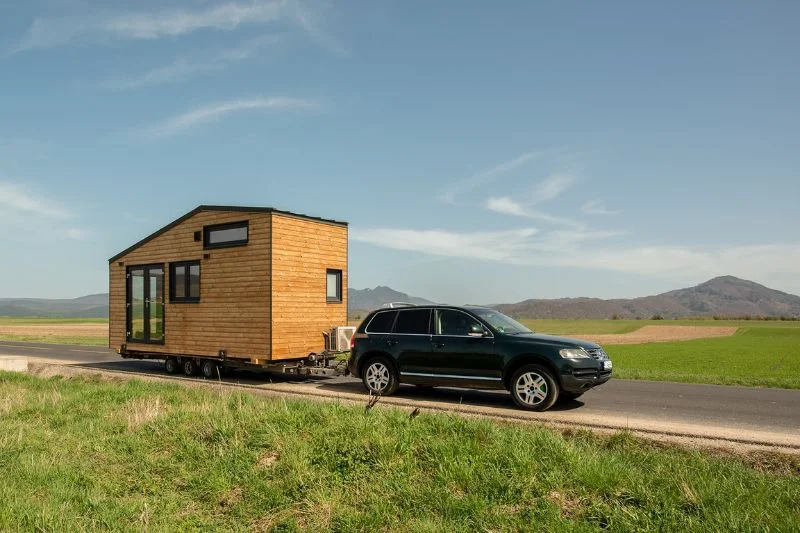
Unlike a conventional house, a tiny house can be transported and relocated. But mobility does not automatically mean exemption from planning regulations.
European countries take different approaches to tiny houses, mobile homes and removable dwellings.
A tiny house is not a single legal category
One of the most common misconceptions about tiny houses is that their small size or mobility automatically determines their legal status.
It doesn't.
Across Europe, authorities may distinguish between:
-> a tiny house on a road-approved trailer;
-> a mobile home or caravan;
-> a removable dwelling;
-> a modular or prefabricated building;
-> a permanent residential building.
The same tiny house may therefore be treated differently depending on the country, the local planning rules and its intended use.
In other words, the tiny house itself is only part of the equation. The plot and the intended use matter just as much.
Does a tiny house need a foundation?
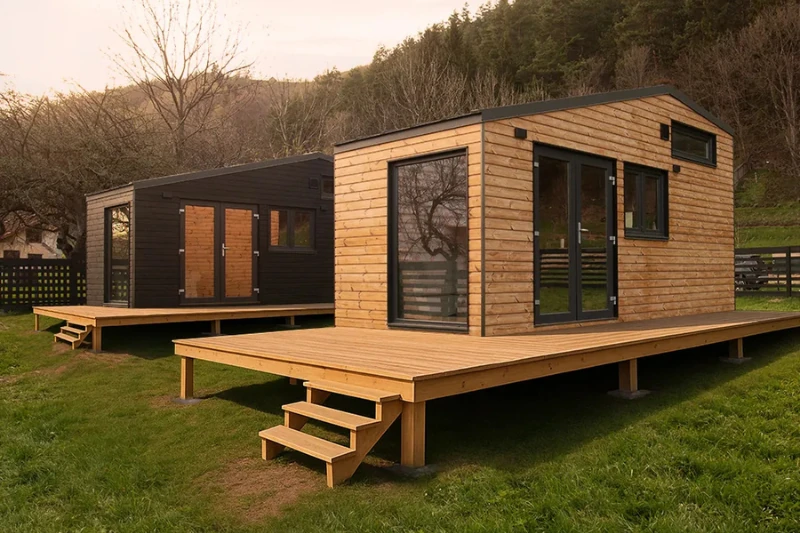
A tiny house does not necessarily need a conventional concrete foundation.
Depending on its design and the requirements of the site, it may be installed on:
- a road trailer;
- concrete slabs or blocks;
- screw piles;
- other removable support systems.
This is one of the advantages of tiny house construction: the building can be designed to minimise its impact on the site and, in many cases, remain relocatable.
But the absence of a conventional foundation does not, by itself, guarantee that planning permission is unnecessary.
This distinction is important when buying or placing a tiny house in another European country.
Does being on wheels mean that a tiny house is exempt?
Not necessarily.
A tiny house on wheels (THOW) is designed to remain transportable and can be moved using a suitable towing vehicle.
In some countries, a road-legal tiny house may be treated similarly to a caravan or another mobile unit when it is used temporarily.
However, this does not automatically give you the right to place it permanently on any plot of land.
For example, French planning guidance distinguishes between tiny houses used for leisure with permanent mobility equipment and removable dwellings used as permanent homes. Both can still be subject to planning rules.
Germany takes an even more restrictive approach to permanent residential use: a tiny house can fall under building law even when it remains on wheels, with the planning status of the plot and its permitted use becoming decisive.
So the important question is not simply:
“Does my tiny house have wheels?”
but rather:
“How is this type of dwelling classified and may it be used on this particular plot?”
What actually determines whether you need permission?
In practice, several factors usually matter.
1. The country and local planning rules
There is no single European planning regime for tiny houses.
Each country has its own building and planning legislation, while municipalities may impose additional requirements.
The European Commission itself notes that spatial planning, zoning and building-permit procedures differ significantly between EU countries.
2. The location of the plot
A tiny house may be acceptable on one plot and not on another.
The zoning designation of the land, permitted uses, access, utilities and local development plan can all affect whether a dwelling can be placed there.
This is particularly important if you are considering agricultural, recreational or otherwise non-residential land.
3. How the tiny house will be used
A tiny house used occasionally for holidays may be treated differently from one used as someone's permanent residence.
The distinction between:
- temporary and permanent use;
- leisure and residential use;
- private use and commercial accommodation
can significantly change the applicable rules.
4. How long it will remain on the site
Temporary placement and permanent installation are often subject to different requirements.
For example, French regulations distinguish between temporary parking of caravans and longer-term installation, with planning requirements changing according to the circumstances.
5. Whether it remains genuinely mobile
A tiny house that retains its wheels, chassis and means of transport may fall under a different legal regime from one that is permanently connected to the land or has its mobility elements removed.
Again, however, mobility is not a universal exemption.
What about utilities?
Connecting a tiny house to electricity, water, sewage or other infrastructure can also affect how the installation is treated.
An off-grid tiny house may have more flexibility in some situations, but being off-grid does not automatically remove planning requirements.
Likewise, connecting a tiny house to public utilities does not necessarily turn it into a conventional building — but it can be one of the factors considered by local authorities.
The legal answer therefore cannot be determined from the construction system alone.
Tiny house regulations: a few European examples
The differences between countries illustrate why there is no single European answer.
France
French planning law recognises specific categories of removable residences and tiny houses can fall under these rules. However, permanent residential use is still subject to planning regulations and the land must meet the applicable requirements.
Germany
In Germany, permanent residential use of a tiny house can trigger building-law requirements even when the house remains on wheels. Whether the plot permits residential use is a key question, with local development plans and the applicable building regulations playing an important role.
Luxembourg
Luxembourg has explicitly recognised the emergence of tiny houses and developed model planning regulations for municipalities.
The government notes that existing urban-planning rules were not originally designed specifically for this type of lightweight, removable housing.
The Netherlands, Denmark and other European markets
The same principle applies elsewhere: the municipality, zoning designation, intended use and duration of placement can determine what permissions are required.
There is no blanket European exemption simply because a dwelling is small or transportable.
So, do you need planning permission for a tiny house in Europe?
Sometimes yes, sometimes no — and the answer cannot be determined by the tiny house alone.
Before placing a tiny house on a plot, you should check:
1. How tiny houses or mobile dwellings are classified in your country
2. Whether the plot allows residential or recreational use
3. Whether temporary or permanent placement is permitted
4. Whether the tiny house needs a planning or building permit
5. Whether additional requirements apply to utilities, access or wastewater
6. Whether local authorities require specific documentation
The safest approach is to check the rules before purchasing the land or committing to the tiny house.
Our approach at TinyKiwi.house
At TinyKiwi.house, we design tiny houses to be comfortable, efficient and genuinely relocatable.
Depending on the project, our tiny houses can be installed on a trailer or supported on removable systems such as concrete blocks or screw piles, without requiring a conventional foundation.
However, we do not assume that mobility automatically means “no permit required”.
Planning regulations depend on the destination country, the specific plot and the intended use of the tiny house.
That is why, for international projects, we can provide the architectural and technical documentation needed to help you clarify the requirements for your location and make informed decisions about transport, installation and site preparation.
Before you buy a tiny house, check the plot first
A tiny house may be movable. Your planning restrictions may not be.
Check the site, zoning and local requirements before you order your tiny house.
If you already have a plot in Europe and want to know whether a TinyKiwi house can be placed there, contact us and tell us where the plot is and how you intend to use the tiny house.